
Classification and Characteristics of Clay Stabilizers: Technical Selection for Different Scenarios
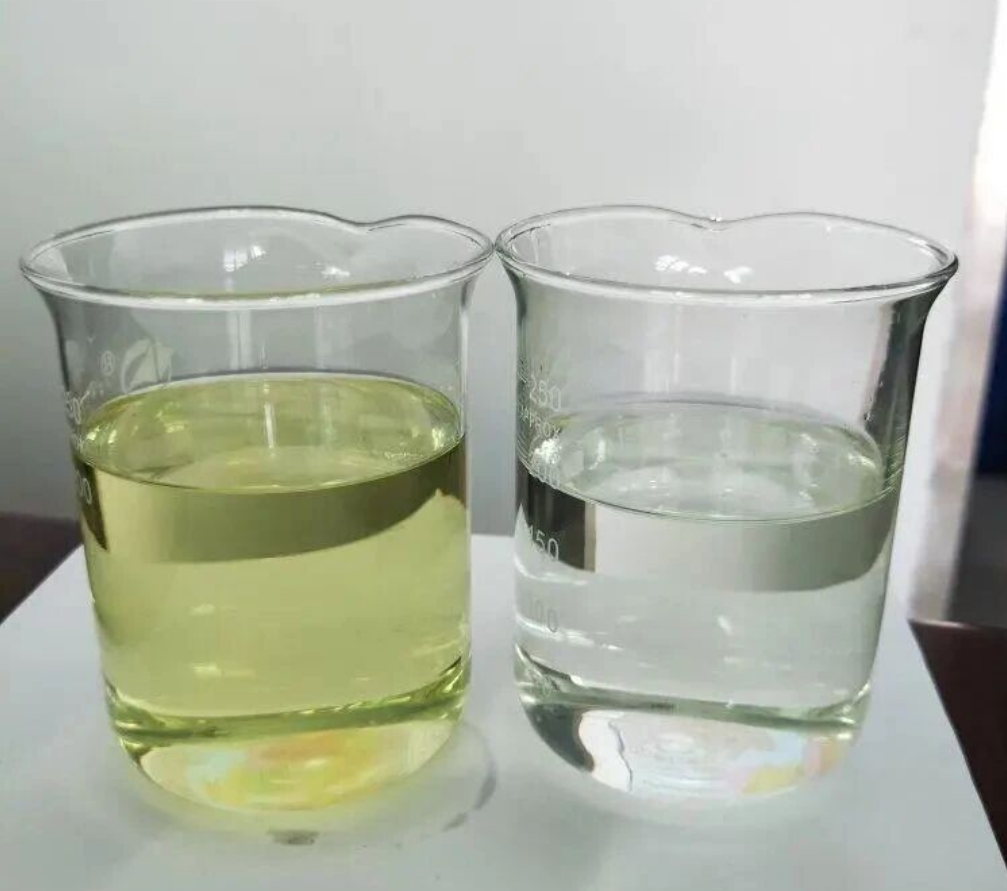
According to the differences in chemical composition, mechanism of action, and application scenarios, clay stabilizers used in oil fields can be divided into four categories. Each type of product has its own emphasis on performance, cost, and applicable conditions, providing diversified choices for the development of different types of oil and gas reservoirs.
(1) Inorganic salt and inorganic alkali clay stabilizers
This is the earliest clay stabilizer used in oil fields, mainly including potassium chloride (KCl), sodium chloride (NaCl), ammonium chloride (NH ₄ Cl), calcium chloride (CaCl ₂), and sodium hydroxide (NaOH).
Core Features
Advantages: Wide range of raw material sources, low prices (usually 1000-3000 yuan per ton), simple construction process, can be directly dissolved in water and injected into the reservoir; The short-term anti swelling effect on expansive clay such as montmorillonite is significant, and the anti swelling rate can reach 80% -90% when added at a concentration of 2% -5%; Good compatibility with other chemical agents and less prone to adverse reactions.
Limitations: Poor stability, easily diluted and washed away by formation water, short effective period (usually 1-3 months), requiring periodic supplementary injection; Only through charge neutralization can expansion be suppressed, and the inhibitory effect on the transport of clay particles is poor; When used at high concentrations, it can increase the mineralization of formation water, which may cause salt scale precipitation and secondary damage.
Applicable scenarios
Suitable for conventional oil and gas reservoirs with shallow, high porosity, high permeability, and low clay content (<5%), especially for pre-treatment of drilling and completion fluids, as well as temporary anti swelling needs in short-term production operations such as acidification and fracturing. For example, in a shallow sandstone oil field, adding 3% potassium chloride to the drilling fluid during drilling effectively suppressed clay swelling, and the reservoir permeability damage rate decreased from 65% when not added to 20% during drilling.
(2) Inorganic polymer clay stabilizer
This type of stabilizer, represented by polyaluminum chloride (PAC), polyferric chloride (PFC), polyaluminum sulfate (PAS), etc., works by hydrolyzing to produce multi nuclear hydroxyl complexes.
Core Features
Advantages: Moderate price (3000-8000 yuan per ton), long-lasting anti inflation effect, and a validity period of up to 6-12 months; Combining the dual functions of charge neutralization and adsorption fixation, it can suppress clay expansion and effectively prevent clay particle migration; Good temperature resistance and can be used in medium to high temperature formations below 120 ℃.
Limitations: The applicable pH range is relatively narrow, and it can only exist stably under acidic or weakly acidic conditions with pH 3-6. It is prone to hydrolysis and precipitation in neutral or alkaline formations, leading to secondary damage to the reservoir; Not applicable to carbonate reservoirs, as the acidic substances produced by hydrolysis will react with carbonate rocks to produce CO ₂ and salt precipitates; Some products are corrosive and need to be used in combination with corrosion inhibitors.
Applicable scenarios
Suitable for sandstone reservoirs, acidic or weakly acidic formations, and medium to low-permeability oil and gas reservoirs with moderate clay content (5% -15%), especially for long-term anti swelling needs in water injection development oil fields. For example, adding 0.5% polyaluminum chloride clay stabilizer to the water injection system of a certain medium permeability sandstone oilfield significantly reduced the phenomenon of clay migration at the bottom of the oil well, increased the reservoir permeability retention rate from 70% to 85%, and stabilized the daily oil production of the oil well at 8-10 tons.
(3) Cationic surfactant based clay stabilizer
The molecular structure of this type of stabilizer contains cationic groups (such as quaternary ammonium salt groups, pyridine groups) and long-chain alkyl groups. Representative products include cetyltrimethylammonium bromide (CTAB), dodecyl dimethyl benzyl ammonium chloride (1227), octadecylammonium chloride, etc.
Core Features
Advantages: Strong adsorption capacity, able to firmly adhere to the surface of clay particles through electrostatic adsorption and hydrophobic interactions, not easily washed away by water, with an effective period of up to 12-24 months; Both anti swelling and anti migration effects are achieved, with an anti swelling rate of over 90%; It has good salt resistance and can maintain stable performance in formations with mineralization degree ≤ 20 × 10 ⁴ mg/L.
Limitations: It can cause the surface of the reservoir rock to change from water wet to oil wet, reduce the permeability of the oil and gas phases, increase the flow resistance of crude oil, and some oil wells may experience a temporary decrease in production; High cost (8000-15000 yuan per ton); Poor biodegradability limits its application in environmentally sensitive areas; Poor compatibility with some anionic chemical agents, such as anionic emulsifiers and dispersants, and prone to flocculation reactions.
Applicable scenarios
Suitable for medium to deep oil and gas reservoirs with high clay content (10% -20%) that require long-term stability, especially for blocks with sufficient reservoir energy and low impact of oil and gas phase permeability on production. For example, a deep sandstone oilfield used a clay stabilizer composed of hexadecyltrimethylammonium bromide and potassium chloride, with a concentration of 1%. After treatment, the anti swelling rate of the reservoir reached 92%, and clay migration was effectively inhibited. The stable production cycle of the oil well was extended by 2-3 years.
(4) Organic cationic polymer clay stabilizer
This is currently the most widely used and comprehensive type of clay stabilizer, with a large number of cationic groups (such as quaternary ammonium salt groups and amine groups) on the molecular chain. Representative products include polyquaternium-6, polyquaternium-7, cationic polyacrylamide (CPAM), and polyamine polymers.
Core Features
Advantages: Wide applicability, suitable for various reservoirs such as sandstone and shale, as well as formations with different pH values such as acidic, neutral, and weakly alkaline; Excellent anti swelling and anti migration effects, with an anti swelling rate of over 95%, and the ability to firmly fix clay particles through the entanglement of molecular chains. It has strong resistance to water, oil, and acid alkali erosion, with an effective period of up to 24-36 months; Has little impact on reservoir wettability and does not significantly reduce oil and gas phase permeability; Good compatibility with other chemical agents, can be used in combination with acidizing fluids, fracturing fluids, corrosion inhibitors, etc.
Limitations: Relatively high cost (10000-20000 yuan per ton); Some products are prone to molecular chain breakage under high temperature (>150 ℃) conditions, leading to a decrease in performance; The preparation process is complex, and the quality stability of some products needs to be improved.
Applicable scenarios
Suitable for various types of oil and gas reservoirs, especially for deep high-temperature and high-pressure, low-permeability, ultra-low permeability oil and gas reservoirs, as well as unconventional oil and gas reservoirs with high clay content (15% -30%) and high risk of damage (such as shale gas and coalbed methane). For example, a shale gas field in the Sichuan Basin of China added 1.5% of poly (quaternary ammonium salt) clay stabilizers during fracturing operations, effectively inhibiting the expansion and migration of montmorillonite in the shale. The fracturing fluid backflow rate increased from 60% to 85%, and the daily gas production of the shale gas well reached 150000 m ³, extending the stable production cycle by 3-5 years.
(5) New type of special clay stabilizer
With the expansion of oil and gas development to more complex formations, new types of special clay stabilizers have emerged, mainly including bio based clay stabilizers, nano material based clay stabilizers, intelligent responsive clay stabilizers, etc., providing new solutions to solve the problem of clay damage under extreme conditions.
Biobased clay stabilizer: using natural plant extracts (such as chitosan, starch derivatives) or microbial fermentation products as raw materials, it has the characteristics of high biodegradation rate (≥ 90%), low toxicity, and environmental friendliness, and is suitable for oil and gas field development in ecologically sensitive areas. For example, chitosan quaternary ammonium salt clay stabilizers have achieved an anti swelling rate of 90% and a biodegradation rate of over 95%, and have been successfully applied in oil fields within the ecological protection zone of the Yellow River Basin.
Nanomaterial based clay stabilizer: Utilizing the small size effect and high specific surface area of nanoparticles (such as nano silica and nano alumina), it adsorbs onto the surface of clay particles and fills the interlayer gaps, inhibiting expansion and migration. It has excellent temperature and salt resistance and can be used under extreme conditions above 200 ℃ and mineralization degree of 30 × 10 ⁴ mg/L.
Intelligent responsive clay stabilizer: It can automatically adjust its action mode according to changes in the formation environment (such as temperature, pH value, fluid mineralization). For example, temperature responsive stabilizers maintain fluidity at room temperature, solidify after entering high-temperature formations, and form a durable and stable protective layer, suitable for high-temperature deep oil and gas reservoirs.
 Two-dimensional code has not been added~